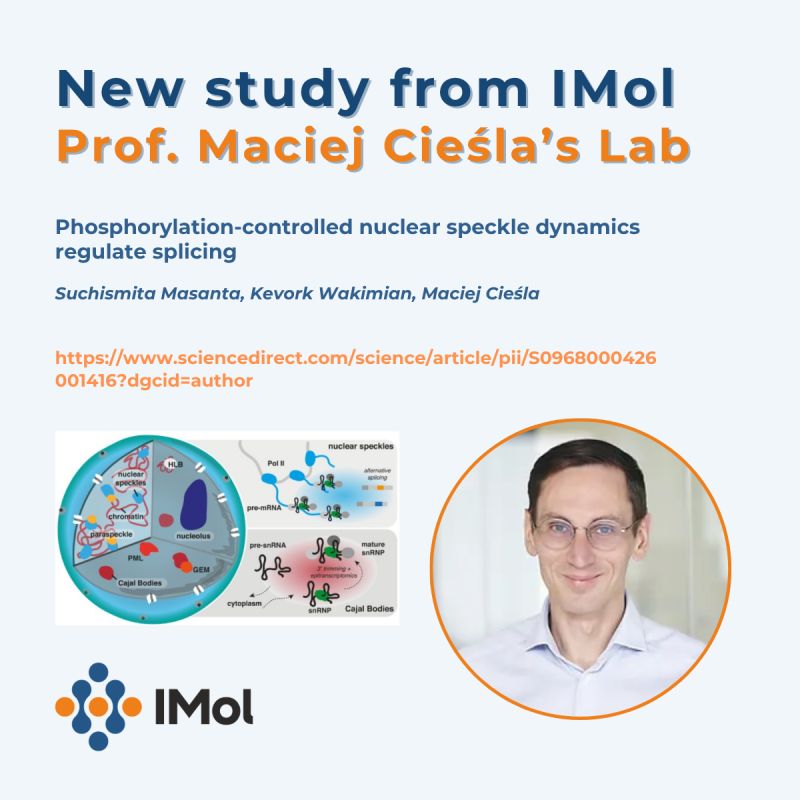

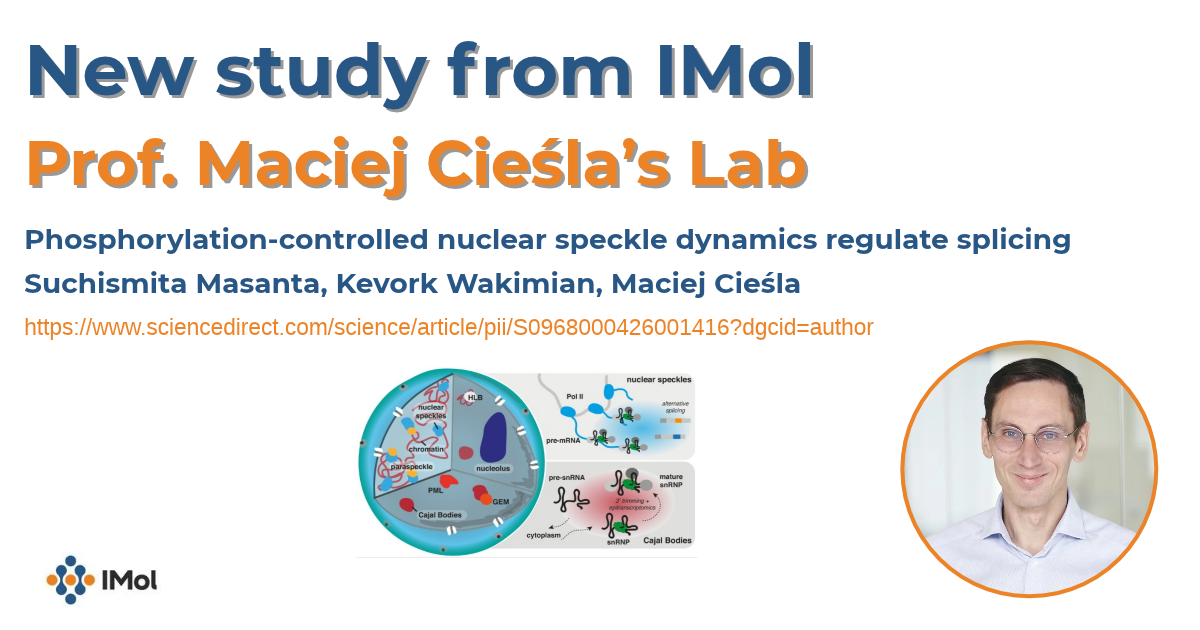
In a new review published in Trends in Biochemical Sciences, researchers from the Laboratory of Stem Cell RNA Metabolism at IMol explore emerging evidence that nuclear speckles function as dynamic, phosphorylation-sensitive hubs linking cellular signaling to RNA processing.
The article synthesizes recent advances in our understanding of how nuclear architecture, chromatin organization, and biomolecular condensates cooperate to regulate splicing across space and time. We propose a unified model in which phosphorylation-driven remodeling of nuclear speckles helps shape alternative splicing outcomes and gene expression programs. Beyond summarizing the field, the review highlights an emerging view of the nucleus as a dynamic and highly organized environment in which phosphorylation-dependent changes in the charge and local concentration of splicing factors drive condensate remodeling, thereby influencing spliceosome activity and gene expression decisions.
Full article here: https://www.sciencedirect.com/science/article/pii/S0968000426001416?dgcid=author